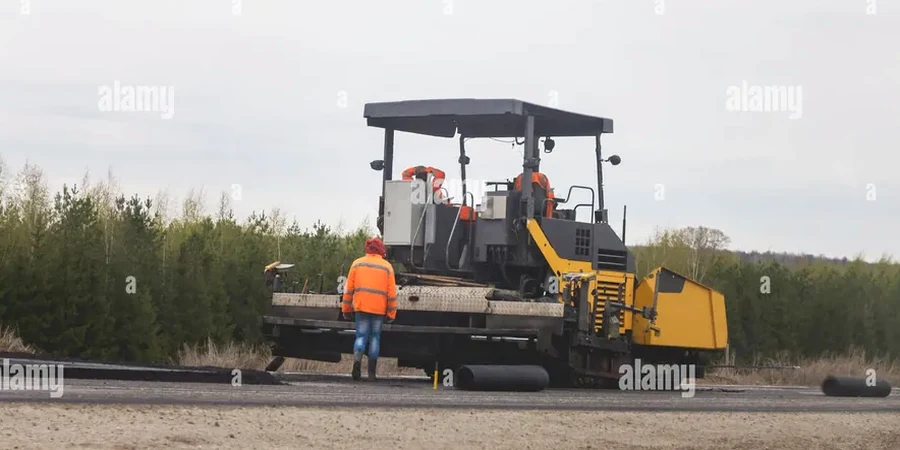
Cheyenne’s development accelerated with the Union Pacific Railroad, but the real engineering challenge lies beneath the high plains. At 6,062 feet, the city experiences over 110 freeze-thaw cycles annually, which wreak havoc on under-designed asphalt sections. Early roads laid on expansive Pierre Shale quickly rutted and cracked, driving the evolution toward solid flexible pavement design that accounts for moisture sensitivity and extreme thermal swings. Our team approaches every project in Cheyenne with a subgrade-first philosophy, recognizing that the semiarid climate and wind-blown silts demand a mechanistic-empirical approach rather than generic catalog solutions. We routinely integrate CBR road testing to validate the structural number before committing to layer thicknesses.
Cheyenne’s 110+ annual freeze-thaw cycles demand a subgrade resilient modulus verified by CBR, not assumed from generic tables.
Quick answers
How much does a flexible pavement design package cost in Cheyenne?
A complete design package including subgrade investigation, CBR laboratory testing, and AASHTO 93 structural analysis typically ranges from US$1,520 to US$5,300, depending on the linear footage and number of borings required. Projects needing full MEPDG Level 2 inputs fall at the higher end.
Why is subgrade CBR so critical for Cheyenne’s roads?
The silty and clayey soils across Laramie County lose significant bearing capacity when wet. A CBR value measured at field moisture, then re-tested after saturation, reveals the strength loss that would otherwise be hidden during a dry-season investigation. This directly controls the required aggregate base thickness.
What asphalt binder grade works best at this elevation?
We specify PG 58-34 for most Cheyenne projects. The low-temperature grade (-34°C) addresses winter cracking, while the high-temperature grade (58°C) handles the intense solar radiation at 6,000 feet. For high-stress intersections, we may bump the high-temp grade to PG 64-34.
How do you address frost heave in flexible pavement design?
Our design includes a granular subbase layer that extends below the frost penetration depth, typically 30 to 42 inches in Cheyenne. The material must contain less than 5% fines passing the #200 sieve to be non-frost-susceptible, verified by laboratory wash tests before placement.