← Home · Foundations

Shallow Foundation Design in Cheyenne: Soil-Bearing Strategies for the High Plains

Together, we solve the challenges of tomorrow.

LEARN MORE →

The most common foundation mistake we see in Cheyenne is treating the local Pierre Shale-derived claystone like stable rock—then watching slab distress appear after two freeze-thaw cycles. At 6,062 feet elevation on the High Plains, Cheyenne’s semi-arid climate masks soils that swell when wetted and shrink when dry, creating movement patterns that crack improperly designed footings within three to five years. A shallow foundation design here must reconcile three competing demands: adequate bearing depth below the 36-inch frost line, a load path stiff enough to resist 115-mph design wind speeds per ASCE 7-22, and a subgrade treatment plan that interrupts the wet-dry cycle. Our approach starts with site-specific SPT drilling to refusal depth, then correlates blow counts with laboratory swell-consolidation data from undisturbed samples—because presumptive bearing values pulled from a generic table will not capture the slickensided clay seams common in the Denver Basin formations that extend under Laramie County.

A Cheyenne footing designed without a swell-consolidation curve is a warranty claim waiting for the next wet spring.

Our approach and scope

Cheyenne sits at the northern edge of the Denver-Julesburg Basin, where Cretaceous-age claystone weathers into a stiff, overconsolidated mantle that can support 3,500 to 5,500 psf net allowable bearing—until moisture content rises above the plastic limit. The city’s average annual precipitation of 15.5 inches may seem low, but it arrives in concentrated spring snowmelt events and summer cloudbursts that saturate the upper four feet rapidly. A responsible shallow foundation design in Cheyenne therefore specifies a capillary break of clean crushed stone, a vapor retarder meeting ASTM E1745 Class A requirements, and perimeter drainage that daylights to grade wherever site slope permits. For structures exceeding two stories or where column loads surpass 150 kips, we often transition from isolated spread footings to a stiffened mat foundation analyzed as a beam on elastic springs: the modulus of subgrade reaction is back-calculated from triaxial consolidated-undrained tests at in-situ moisture, not from a textbook range. This prevents the under-design that occurs when engineers assume drained behavior in what is functionally an undrained loading condition during Cheyenne’s wet season.
Shallow Foundation Design in Cheyenne: Soil-Bearing Strategies for the High Plains
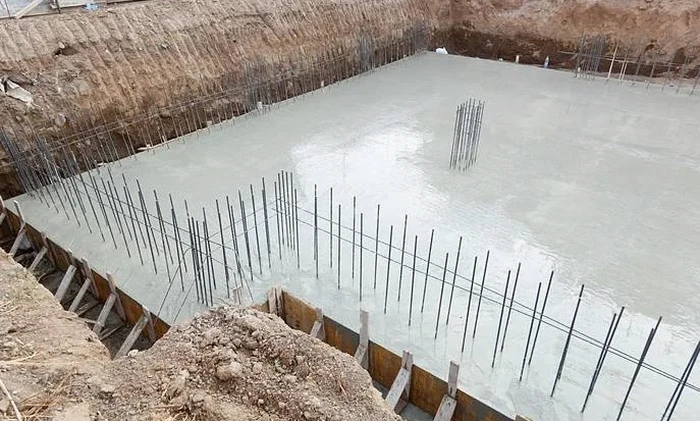
Technical reference image — Cheyenne

Local ground factors

IBC Section 1803 requires a geotechnical investigation for every structure in Seismic Design Category C or higher—Cheyenne falls into Category C under the current USGS hazard maps, with a 0.2-second spectral acceleration of roughly 0.28g on Site Class D. A shallow foundation designed without a site-specific shear wave velocity profile risks two failure modes: bearing capacity degradation during cyclic loading and differential settlement where claystone thickness varies across the footprint. The stiff clay here amplifies short-period motion, so we compute seismic settlement using the Duku-Birgisson method rather than relying on the pseudo-static factor of safety alone. Additionally, Cheyenne’s wind regime—sustained winter gusts above 60 mph—generates uplift at the windward column bases that must be resisted by footing dead load plus an engaged soil wedge; neglecting the wedge contribution leads to oversized footings and unnecessary concrete cost. Every report we issue includes a bearing capacity envelope that plots the interaction of vertical load, moment, and horizontal shear so the structural engineer can verify the foundation system holistically.

Need a geotechnical assessment?

Reply within 24h.

Email: contact@geotechnicalengineering.sbs

Typical values

ParameterTypical value
Typical net allowable bearing (stiff claystone, intact)3,500 – 5,500 psf
Design frost depth (Cheyenne, per IBC Table 301.2)36 inches below finished grade
Minimum footing width (residential, IBC 1809.4)12 inches
Swelling pressure range (Pierre Shale weathered zone)1,200 – 4,800 psf
Design wind speed (Risk Category II, ASCE 7-22)115 mph (3-second gust)
Typical modulus of subgrade reaction (k_v, stiff clay)100 – 200 pci (field-adjusted)
Recommended capillary break thickness4 inches of AASHTO No. 57 stone

Associated technical services

01

Bearing Capacity Analysis

General and local shear failure checks per Terzaghi-Meyerhof, with Vesic’ modification for rigid footings on layered profiles. Includes the inclination and eccentricity reduction factors required for Cheyenne’s wind-governed load combinations.

02

Settlement Prediction

Immediate settlement via Schmertmann’s strain influence method calibrated to SPT N60; consolidation settlement from oedometer curves with pre-consolidation stress identified by Casagrande construction. Long-term swell magnitude reported for the upper weathered zone.

03

Slab-on-Grade Design

Post-tensioned or conventionally reinforced slab options with subgrade drag equation per PTI DC10.5. Stiffening beam depth and spacing derived from the edge moisture variation distance measured during site reconnaissance.

04

Foundation Drainage Plan

French drain layout, sump pit sizing, and discharge routing designed to maintain the design moisture content assumed in the bearing capacity model. Includes a construction-phase inspection checklist for the capillary break installation.

Regulatory framework

IBC 2021 (Chapter 18: Soils and Foundations), ASCE 7-22 (Minimum Design Loads: Chapters 12, 26, 28), ASTM D2487-17 (Unified Soil Classification System), ASTM D2435/D4546 (One-Dimensional Consolidation and Swell)

Quick answers

What is the typical bearing capacity for a shallow foundation in Cheyenne?

Intact stiff claystone in the Cheyenne area commonly yields a net allowable bearing pressure between 3,500 and 5,500 psf. However, values drop to 1,500–2,500 psf in the weathered, slickensided upper zone, and each site requires borings to confirm the depth of this transition.

How much does a shallow foundation design report cost in Cheyenne?

A complete shallow foundation design package—including two borings, laboratory swell-consolidation testing, and a sealed bearing capacity report—typically ranges from US$1,980 to US$2,900 depending on boring depth and the number of load cases analyzed.

Do I need a geotechnical investigation for a single-family home foundation in Cheyenne?

Yes. IBC Section 1803.1 requires a geotechnical investigation for all structures unless the building official waives it based on adequate local knowledge. Given the expansive claystone documented across Laramie County, the City of Cheyenne building department routinely requires a site-specific report before issuing a footing inspection approval.
Location and service area

We serve projects across Cheyenne and surrounding areas.

View larger map